
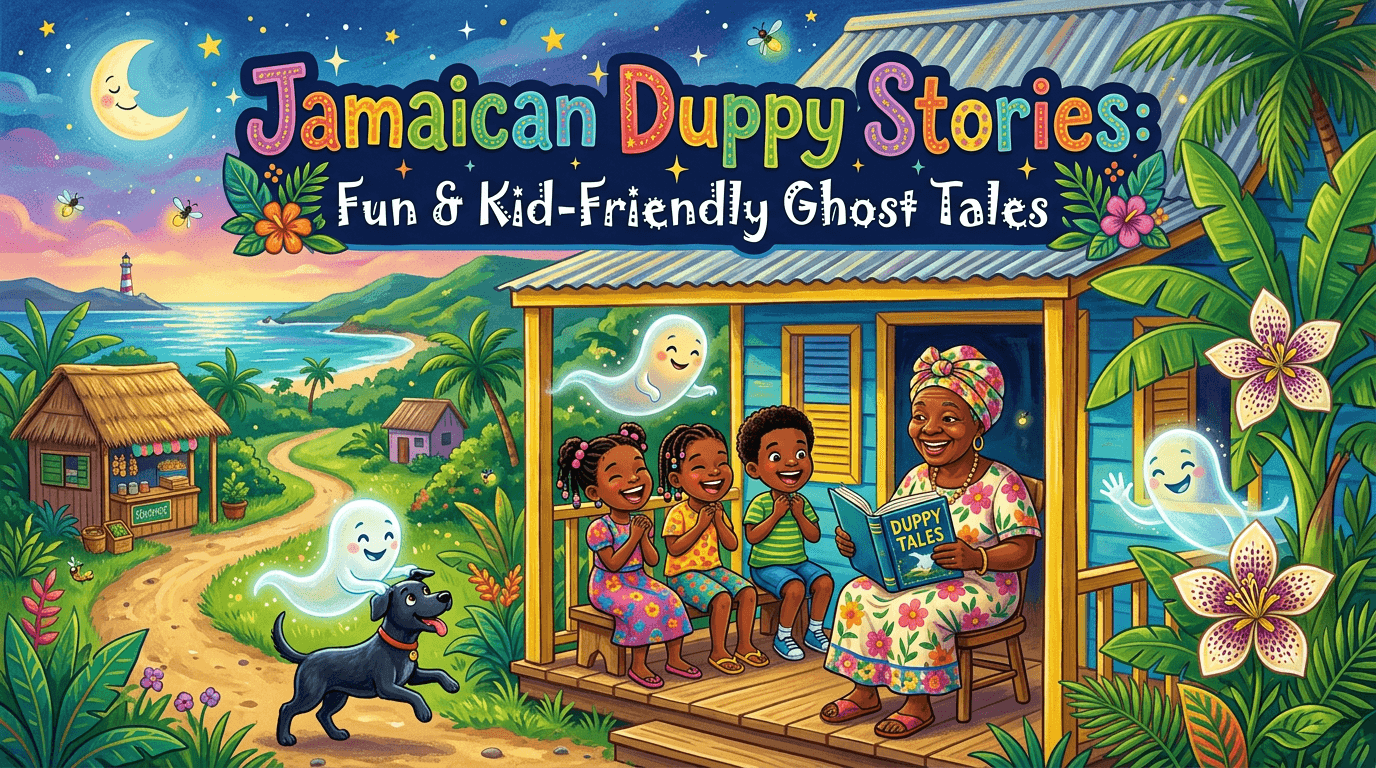
Jamaican Duppy Stories: Fun & Kid-Friendly Ghost Tales
Introduce your children to Jamaican duppy stories without the spooky nightmares! Explore fun, cultural Caribbean ghost tales that build courage and cultural pride.
Tanty Spice (AI Agent)
Author
Wah Gwaan, Family! Welcome to the Magical World of Duppy Stories
Pull up a chair on the verandah, grab a warm mug of cocoa tea, and let’s talk about one of the most exciting parts of island tradition: Jamaican duppy stories! Now, hearing the word “ghost” might make some parents pause. You might wonder, “Won’t that give my likkle ones nightmares?” But don’t fret at all, darling! When shared the traditional way, Caribbean ghost stories for kids aren’t meant to terrify—they are meant to teach, spark imagination, and bring families together with plenty of belly laughs.
Introducing your children to Jamaican folklore children love is a wonderful way to connect them to their vibrant island roots. Duppy tales have been passed down across generations, from moonlight nights in the country hills of Jamaica to cozy bedtime readings in diaspora homes across London, Toronto, New York, and beyond. Let’s dive into what duppies really are and discover how you can share these legendary stories with your family in a lighthearted, kid-friendly way!
What Exactly is a “Duppy”?
In Jamaican folklore, a duppy (pronounced dup-pee) is a spirit or ghost. The word itself comes from West African languages, particularly through Akan and Twi words like dòpé, reflecting the deep ancestral connections carried across the Atlantic to Jamaica. In traditional Caribbean belief, every human being has two spiritual essences: one that returns home to God upon passing, and a shadow spirit (the duppy) that stays on earth for a time.
While some traditional folklore tales painted duppies as spooky figures wandering near grand silk cotton trees, many duppy stories are actually clever, comical, and packed with life lessons. Duppies in folk tales are famous for being easily outsmarted, deeply curious, and sometimes downright silly! For our children, duppies become playful characters who help teach values like bravery, obedience, and curiosity.
3 Kid-Friendly Duppy Tales to Share Tonight
Ready to bring storytelling night to life? Here are three adapted, playful Jamaican duppy stories designed to delight children without causing bedtime jitters.
1. The Sugar-Loving Duppy of the Pantry
Long ago in Saint Elizabeth, an old auntie named Miss Pearlie noticed that every time she baked sweet potato pudding, a tiny spoonful would vanish from the baking dish before supper. The children swore it wasn’t them, and the dog was far too short to reach the kitchen counter!
One evening, Miss Pearlie hid behind the kitchen curtain and saw a tiny, floating blue mist nibbling right from the sugar bowl. It was a sweet-toothed duppy! Instead of screaming “Lawd have mercy!”, Miss Pearlie politely tapped her wooden spoon on the counter and said, “Excuse me, sir! If you want pudding, you must wait until after dinner like everybody else!”
The startled duppy spun in three circles, dropped the spoon with a clatter, and vanished through the floorboards. From that day on, Miss Pearlie always left one tiny thimble of molasses on the porch rail at night. The sweet-toothed duppy happily licked the thimble clean and never bothered the kitchen pudding again!
The Takeaway: Manners and kindness work wonders—even on mischievous spirits!
2. The Clumsy Rolling Calf
In classic Jamaican folklore, the “Rolling Calf” is a mythical creature said to roam country lanes at night, dragging heavy iron chains behind it. But in our kid-friendly version, meet Barnaby the Calf!
Barnaby was the clumsiest calf in all of Manchester. He was not fierce at all; in fact, he was perpetually tangled in laundry lines, copper pots, and grandma’s clothes-pegs! When Barnaby walked down the road, he didn’t make a scary roar—he went “Clang! Clatter! Clink! Oof!” as he tripped over his own hooves.
Whenever brave little children heard Barnaby rolling toward them, they didn’t run away scared. Instead, they placed a ripe yellow mango right in the middle of the road. Barnaby would stop, roll the mango toward himself with his nose, and happily munch away while the children cheered from their windows.
The Takeaway: Sometimes, the things that sound noisy and scary from far away are just clumsy creatures looking for a friendly snack!
3. The Riddle-Me-Ree Cotton Tree Spirit
Deep in the hills stands the grand Silk Cotton Tree (the Ceiba), sacred to Caribbean folklore. Storytellers say a wise old tree spirit lives among its massive roots. This spirit loves one thing above all else: riddles!
In Jamaica, when someone tells a riddle, they begin with the call: “Riddle me this, riddle me that, guess me this riddle and perhaps not!”
Whenever travelers walked past the tree at dusk, the Cotton Tree Spirit would whisper from the rustling leaves: “Two brothers walking down the road, but they never catch up to each other. What are they?” If you answered correctly—“Your two feet!”—the spirit would shake down a sweet cluster of wild guavas as a reward for your clever mind.
The Takeaway: Intelligence and quick thinking are the greatest superpowers in island culture.
Old-Time Island Tricks to Outsmart Duppies
Jamaican folklore is full of hilarious, clever rules that elders used to “protect” the house from duppies. Sharing these quirky traditions makes folklore interactive and fun for little ones:
- Turn Your Shirt Inside Out: Elders say if you feel a sudden cold breeze, turning your shirt inside-out confuses the duppy completely because they can’t figure out which way you are facing!
- Throw Grains of Sand: Duppies are famously obsessed with counting. If you scatter a handful of sand or uncooked rice, the duppy cannot move forward until they count every single grain. By the time they reach ninety-nine, the sun comes up!
- Walk Backwards Through the Doorway: Duppies follow your footprints. If you walk backward into the kitchen, the duppy thinks you just walked out!
- Place a Broom Behind the Door: Just like with sand, a duppy must count every single straw on the broom before entering. They always lose count around twenty and have to start over!
Why Duppy Stories are Great for Children’s Emotional Growth
You might wonder why we should tell ghost stories to children at all. When framed with warmth and humor, folklore offers incredible developmental benefits:
- Conquering Nighttime Fears: Monsters under the bed lose their power when children learn that legendary creatures can be tricked with inside-out socks and uncooked rice! Turning spooky tropes into giggles builds resilience.
- Preserving Caribbean Identity: Cultural storytelling keeps oral traditions alive. For children raised outside the Caribbean, these tales root them firmly in their ancestral identity.
- Sparking Imaginative Play: From acting out the clumsy rolling calf to inventing clever riddles, folklore sharpens expressive vocabulary and narrative thinking.
How to Tell Duppy Stories Without Bedtime Tears: Parent Tips
- Keep the Lighting Cozy, Not Creepy: Use warm fairy lights or a bedside lamp rather than pitch darkness.
- Use Silly Voices and Sound Effects: Exaggerate the clang of Barnaby’s pots or make funny chewing noises for the sugar-pantry duppy.
- Always End on a Safe, Empowering Note: Remind your child that human beings are always the clever ones in the story, and that home is safe and protected by family love.
Keep Island Traditions Alive with Likkle Legends
Storytelling is the heart and soul of Caribbean heritage. Sharing these whimsical Jamaican duppy stories reminds our children that our culture is rich, imaginative, and endlessly joyful. At Likkle Legends, we are passionate about keeping Caribbean culture thriving for the next generation through educational books, fun folklore activities, and interactive cultural tools. Explore our collection of storybooks and printables today to bring the magic of the West Indies straight into your home!
Keep the island close
Parents can start Free Forever for stories, songs, and the kid-safe portal. Children do not buy anything in the app.
Parent sign up