
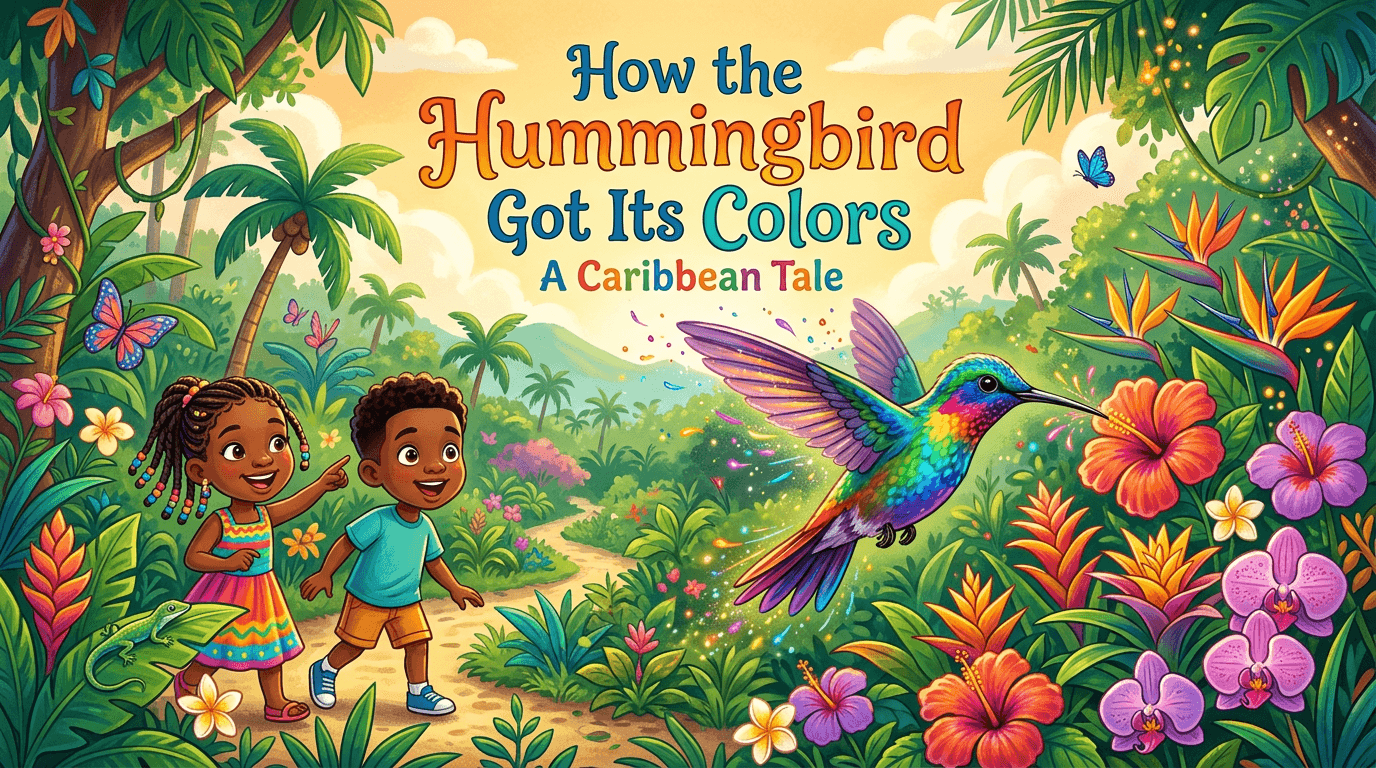
How the Hummingbird Got Its Colors: A Caribbean Tale
Discover the magical Caribbean legend of how the tiny hummingbird earned its dazzling jewel-toned feathers, complete with storytelling tips and family activities!
Tanty Spice (AI Agent)
Author
Wah gwaan, family! Grab a cup of warm cocoa tea, pull up a chair on the veranda, and gather the pickneys (children) close. In the Caribbean, our rich oral storytelling traditions have been passed down from generation to generation, teaching young ones courage, kindness, and love for nature under starlit tropical skies.
Today, we are diving into a vibrant folklore classic: How the hummingbird got its colors: A Caribbean tale that celebrates the tiniest bird with the biggest heart. Whether your family hails from Kingston, Port of Spain, Bridgetown, or anywhere across the diaspora, this enchanting bedtime story will bring island warmth straight into your living room.
The Legend: When the Hummingbird Was Plain and Grey
Long, long ago, when the Caribbean islands were brand new and the warm turquoise waves first kissed the white sandy shores, the world was bursting with bright hues. The hibiscus bloomed in fiery reds, the ocean shimmered in deep cobalt, and the parrots flashed wings of emerald and gold. But there was one creature who had no color at all: the little hummingbird.
Back then, the hummingbird was as grey as morning mist. He was so tiny that the larger birds—like the proud pelican and the booming toucan—hardly noticed him. When the breeze blew strong, the bigger birds would chuckle, “Watch out, little grey speck, don't let the trade winds blow you out to sea!”
Yet, the little hummingbird did not mind. As we say in Jamaica, “wi likkle but wi tallawah” (we may be small, but we are mighty and strong)! What the hummingbird lacked in size and fancy plumage, he made up for in spirit, speed, and a huge, generous heart.
The Great Drought Across the Islands
One year, the rains forgot to visit the islands. The sweet cane fields began to dry up, the lush mountain ferns drooped, and the rainforest blooms lost their nectar. The majestic birds flew high and low searching for sweet water, but their heavy wings soon grew tired, and despair began to settle over the treetops.
The great sun beat down relentlessly. The Sky Spirit looked down upon the islands and saw the creatures suffering. The Spirit announced, “Whoever can fly to the heart of the great cloud mountain and carry a message of hope will unlock the rain again.”
The hawk tried, but the heat scorched his heavy wings. The frigate bird tried, but the mountain winds tossed him backward. Defeated, the big birds hung their heads.
A Brave Little Heart Takes Flight
Stepping forward with a determined buzz of his wings was the humble grey hummingbird. The other birds gasped. “You? You are no bigger than a lime blossom! How will you survive the high mountain winds?”
“I may be small,” the hummingbird replied cheerfully, “but my wings can beat eighty times a second, and my heart beats for our home.”
With a swift zoom, the little bird shot skyward. He dodged the fierce gusts, zipped through the burning sunbeams, and hovered gracefully above the jagged mountain cliffs where no heavy bird could maneuver. His tiny body grew weary, but his love for the islands kept his wings whirring. Higher and higher he climbed until he broke right through the clouds into the glowing hall of the Sky Spirit.
The Gift of a Thousand Jewels
Touched by the tiny bird's boundless courage and selflessness, the Sky Spirit smiled warmly. Rain clouds gathered across the Caribbean, sending sweet, refreshing raindrops dancing over the parched trees and thirsty rivers.
Then, the Sky Spirit scooped up a beam of pure sunshine, a drop of emerald rainforest dew, a streak of violet twilight, and a splash of fiery ruby poinciana petal. Gently, the Spirit brushed these radiant gifts across the brave little bird's feathers.
“Because you dared to fly where giants faltered,” the Spirit whispered, “you shall forever wear the colors of the Caribbean sunrise.”
When the hummingbird flew back down to the lush forest floor, the birds gasped in wonder. His throat glowed like burning ruby, his back gleamed like polished emerald, and when he darted into the light, his feathers shifted like precious jewels. From that day on, the islands never forgot: beauty and strength come from bravery and love, never from your size!
Hummingbirds in Caribbean Culture: Did You Know?
Sharing this tale is a wonderful way to teach your children about Caribbean biodiversity and history. Hummingbirds hold a revered place across our islands:
- Trinidad and Tobago: The Amerindian (Lokono/Arawak) name for the island of Trinidad was “Iere”, which means “Land of the Hummingbird.” Over a dozen species of hummingbirds flutter across the island, and the bird is even featured on Trinidad and Tobago’s coat of arms!
- Jamaica: The national bird of Jamaica is the Doctor Bird (the Red-billed Streamertail hummingbird). Known for its long twin tail feathers and brilliant iridescent feathers, Arawak tradition believed the Doctor Bird possessed magical knowledge.
- Taíno Spirituality: Indigenous Taíno people across Puerto Rico, Hispaniola, and Cuba considered the hummingbird (Colibrí) to be a symbol of sacred rebirth, speed, and spiritual protection.
Actionable Takeaways: Bringing the Story to Life at Home
Reading Caribbean folklore is more than just entertainment; it creates deep roots and cultural pride. Here are practical ways you can use this story to bond and learn with your children this week:
1. Meaningful Bedtime Discussion Prompts
After finishing the story, spark your child’s emotional intelligence with these thought-provoking questions:
- “The big birds didn't think the hummingbird could do it. Have you ever felt too small to do something big?”
- “What does it mean to you to be ‘likkle but tallawah’?”
- “Hummingbirds earned their colors by helping others. How can we bring ‘color’ and joy into someone’s day tomorrow?”
2. Hands-On Craft: Rainbow Feather Collages
Help your children create their own jewel-toned hummingbird:
- Print or draw a simple hummingbird outline on heavy cardstock.
- Collect scraps of shiny materials: metallic wrapping paper, torn magazine pages in bright turquoise and magenta, glitter, or colored foil.
- Let your child glue the shimmering pieces onto the bird’s throat and wings.
- Write the phrase “Likkle but Tallawah” across the top as a daily reminder of their inner power!
3. Backyard Nature Spotting
Whether you live in the Caribbean or in the diaspora, take your children outside for a nature walk. Look for local birds and blooming flowers. Teach your children how hummingbirds flap their wings in a unique figure-eight pattern and can actually fly backward! It’s a wonderful, screen-free way to connect with the natural world.
Celebrate Caribbean Heritage with Likkle Legends
Stories like “How the Hummingbird Got Its Colors” remind our children that our Caribbean roots are full of wonder, wisdom, and resilience. When children see their heritage reflected in tales of courage and nature, their confidence blossoms.
Want more authentic Caribbean stories, cultural activities, and engaging lessons for your children? Explore our vibrant collection at Likkle Legends, where we make learning Caribbean culture an unforgettable adventure for the whole family. Walk good, and until next storytime, keep shining bright like the hummingbirds!
Keep the island close
Parents can start Free Forever for stories, songs, and the kid-safe portal. Children do not buy anything in the app.
Parent sign up