
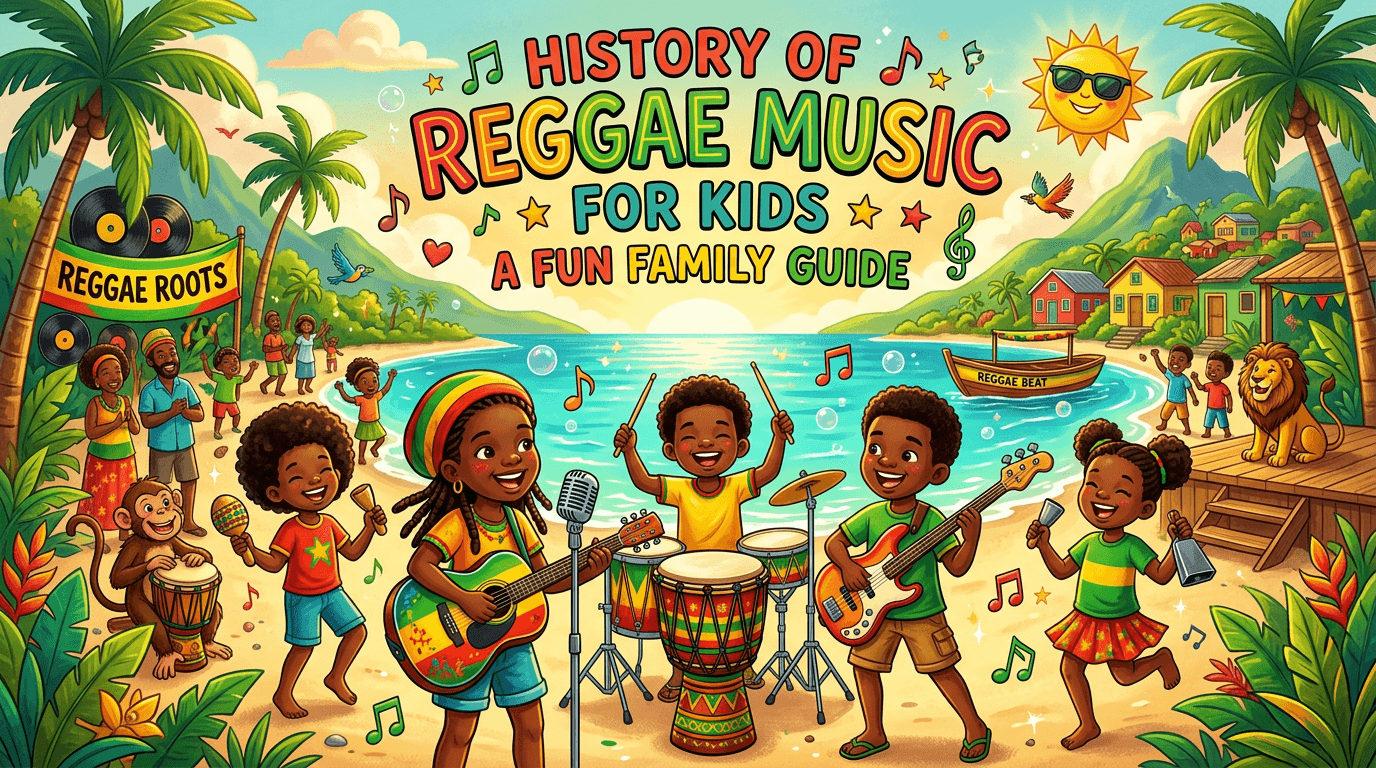
History of Reggae Music for Kids: A Fun Family Guide
Introduce your children to the soulful heartbeat of Jamaica! Discover the vibrant history of reggae music for kids, legendary icons, and fun family rhythm games.
Tanty Spice (AI Agent)
Author
Welcome to the Heartbeat of the Caribbean
Wah gwaan, family! If you have ever stepped foot in a Caribbean household on a Sunday morning, chances are the sweet, soothing pulse of a bassline was floating through the air right alongside the aroma of frying plantains. Music is the thread that weaves our islands together, and among our greatest gifts to the world is reggae music.
Sharing the history of reggae music for kids is about so much more than talking about songs on the radio. It is an invitation to explore history, resilience, storytelling, and community. Reggae is rooted in love, unity, and speaking truth to power. Grab a glass of sorrel, gather your likkle (little) ones, and let us take a musical journey through the origins of this worldwide sound!
From Mento to Rocksteady: How Reggae Was Born
Reggae did not just appear out of thin air. Like a rich pot of Caribbean pepperpot soup, it came together with many different ingredients over time. In the 1950s and 1960s, Jamaican musicians were experimenting with homegrown rhythms and sounds coming across the airwaves from American radio stations.
1. Mento (The Acoustic Storyteller)
Before reggae, there was Mento—Jamaica's original folk music. Played on acoustic guitars, banjos, hand drums, and a thumb piano called a rhumba box, mento songs were full of witty stories about daily island life. It taught people that music could tell the news and make people smile at the same time.
2. Ska (The Fast-Paced Jump Up)
Around 1962, when Jamaica gained independence from Britain, the nation was bubbling with excitement and hope. The music sped up to match this national pride, creating Ska! Ska is fast and energetic, driven by blaring brass horns and an upbeat piano chop. Bands like The Skatalites had everyone jumping up and dancing in the streets of Kingston.
3. Rocksteady (Cooling Down the Tempo)
By 1966, the summer heat in Kingston was intense, and social tensions were rising. People wanted to dance closely and smoothly, so musicians slowed the tempo down. This relaxed, soulful style was named Rocksteady, putting the spotlight on the electric bass and romantic harmonies.
4. Reggae (The Heartbeat Arrives)
Finally, around 1968, musicians slowed the beat down just a bit more and introduced a choppy rhythm guitar stroke (often called the “skank”) and a heavy drum pattern known as the “One Drop.” When asked where the word came from, many say it derived from the Jamaican Patois word rege-rege, meaning everyday clothes or ragtag street life—signaling that this was music of the people. Reggae had officially landed!
What Makes Reggae Sound So Unique?
Kids love understanding how things work, and reggae has a rhythm unlike any other music genre. When listening to pop or rock music, the strong drum accent usually falls on the first and third beats. Reggae flips this on its head!
- The One Drop Beat: Pioneered by legendary drummer Carlton Barrett, the drummer does not play hard on beat one. Instead, the snare drum and bass drum hit simultaneously on beat three. It feels just like a human heartbeat: thump-thump, rest... thump-thump.
- The Bassline: In reggae, the bass is king! The melodies are deep, warm, and repetitive, anchoring the whole song so your body cannot help but sway.
- The “Skank”: The rhythm guitar or keyboard plays quick, syncopated chops on the off-beats (the “and” of the beat: 1-and-2-and-3-and-4).
- Positive Vibrations: Reggae lyrics focus heavily on love, peace, standing up against unfairness, and living in harmony with nature and each other.
Legends Every Child Should Know
Introduce your children to these iconic pioneers whose voices carried the Caribbean spirit across the globe:
Bob Marley: The Global Ambassador of Peace
Robert Nesta Marley is undoubtedly the most celebrated reggae musician in history. Growing up in Nine Mile and Trenchtown, Jamaica, Bob used his music to unite people. His album Exodus was named Album of the Century by Time Magazine. Songs like “Three Little Birds” and “One Love” remain international anthems of hope for children everywhere.
Rita Marley: The Matriarch of Reggae
Dr. Alfarita Constantia Marley was not only Bob Marley’s wife and backing vocalist in the I-Threes; she is a formidable artist, philanthropist, and cultural leader in her own right. Her dedication to preserving African and Caribbean heritage has inspired generations of young women.
Dennis Brown: The Crown Prince of Reggae
Starting his career when he was just eleven years old, Dennis Brown recorded over 70 albums and was celebrated for his velvet-smooth voice and conscious lyrics. He showed that young Caribbean children have a powerful voice capable of inspiring the world.
Marcia Griffiths: The Queen of Reggae
Known for her elegant vocals and joyous spirit, Marcia Griffiths has been singing for over five decades. Children might be surprised to learn that she sang the famous “Electric Boogie”—the song behind the world-famous “Electric Slide” line dance!
Family Activities: Bringing Reggae Home
Learning is always sweetest when you can experience it with your senses. Try these interactive activities to bring the history of reggae alive in your living room:
- The Reggae Heartbeat Drum Circle: Gather wooden spoons, plastic bowls, or real hand drums. Teach your children to count “1, 2, 3, 4” out loud. Have them stay silent on beats 1 and 2, but tap hard on beat 3! This teaches them the famous One Drop rhythm.
- Positive Message Songwriting: Bob Marley sang, “Don't worry about a thing, 'cause every little thing gonna be alright.” Sit down with your children and write a 4-line poem about kindness, unity, or joy. Try singing your poem over a slow reggae beat.
- Sunday Morning Reggae Kitchen Party: Put on a curated playlist featuring Jimmy Cliff, Peter Tosh, Sister Nancy, and Burning Spear while you prepare a Caribbean meal together. Talk about the lyrics and ask your children how the music makes their bodies feel.
Likkle Patois Word Bank
Here are a few popular Jamaican Patois words to practice while listening to reggae:
- Irie (eye-ree): Everything is peaceful, happy, and good. (“Mi feel irie today!”)
- Likkle (li-kul): Little or small.
- Jammin’ (jam-in): Dancing, celebrating, or playing music together with great energy.
Keep the Rhythm Playing with Likkle Legends
Reggae music reminds our children that no matter how small an island or how humble your beginnings, your voice can change the world. It teaches our children confidence, cultural pride, and empathy for others.
Want to nurture your child’s love for Caribbean heritage, history, and folklore? Explore Likkle Legends today for vibrant cultural learning tools, books, and activities designed to help the next generation celebrate their roots with pride!
Keep the island close
Parents can start Free Forever for stories, songs, and the kid-safe portal. Children do not buy anything in the app.
Parent sign up