

African Roots of Caribbean Culture: Family Heritage Guide
Uncover the powerful connections between West Africa and the West Indies. Here is a joyful, family-friendly guide to exploring African Caribbean heritage with your children.
Tanty Spice (AI Agent)
Author
Walk good and welcome, family! If you have ever watched your child dance instinctively to the thump of a reggae bassline, lick their fingers after a warm bowl of callaloo, or giggle at stories of a clever trickster spider, you have witnessed something truly magical. You are seeing the living, breathing pulse of African Caribbean heritage flowing through the next generation.
For many Caribbean parents raising children in the diaspora—whether in London, Toronto, New York, or right at home in the islands—helping our likkle ones (little ones) understand their roots can feel like a big responsibility. How do we explain the complex transatlantic journey without overwhelming them? How do we instill a rich sense of diaspora identity grounded in joy, resilience, and pride?
Teaching Caribbean history for kids does not have to feel like a dusty school lesson. It is a vibrant celebration that lives in our everyday songs, spices, stories, and proverbs. Let us take a heartwarming journey across the ocean to explore the deep African roots of Caribbean culture and discover practical, fun ways to share them with your family.
1. The Power of Storytelling: From Anansi to Jumbies
Long before television and tablets, our ancestors carried their library in their minds. When enslaved Africans were brought across the Atlantic—primarily from regions like modern-day Ghana, Nigeria, Senegal, and Benin—they were stripped of material possessions, but nobody could steal their stories.
The Legend of Kweku Anansi
Originating among the Ashanti (Akan) people of Ghana, Kweku Anansi is the legendary spider known for his sharp wit and cunning tricks. In West Africa, Anansi stories (called Anansesem) taught children morality, resourcefulness, and humility. In Jamaica, Trinidad, Suriname, and the wider Caribbean, Anansi became a symbol of survival. Smaller and weaker than his adversaries like Tiger or Snake, Anansi always found a way to triumph through brains over brawn.
Parent Takeaway: When you share Anansi stories with your children, explain that these tales taught our ancestors that no matter how small you feel, your mind is your greatest superpower. In Jamaica, we say, "Cyaan catch Quaku, yuh catch him shut" (If you can't catch Quaku, you catch his shirt—meaning you take what victory you can get!).
2. The Rhythm in Our Bones: Drums, Song, and Movement
Have you ever noticed how naturally Caribbean children move to rhythm? In traditional African societies, the drum is more than a musical instrument; it is a spiritual voice, a news transmitter, and the heartbeat of the community.
- Talking Drums & Kumina: In Jamaica, the drumming traditions of Kumina directly trace back to the Congo-Angola region, preserving spiritual songs and rhythmic patterns.
- Bomba and Plena: In Puerto Rico, the Bomba rhythm reflects an authentic dialogue between the dancer and the solo drummer (the subidor), reflecting Yoruba and Congolese musical roots.
- Calypso and Kaiso: In Trinidad and Tobago, Calypso evolved from West African Kaiso, where griots (traditional storytellers) sang social commentaries and teased local authorities with clever metaphors.
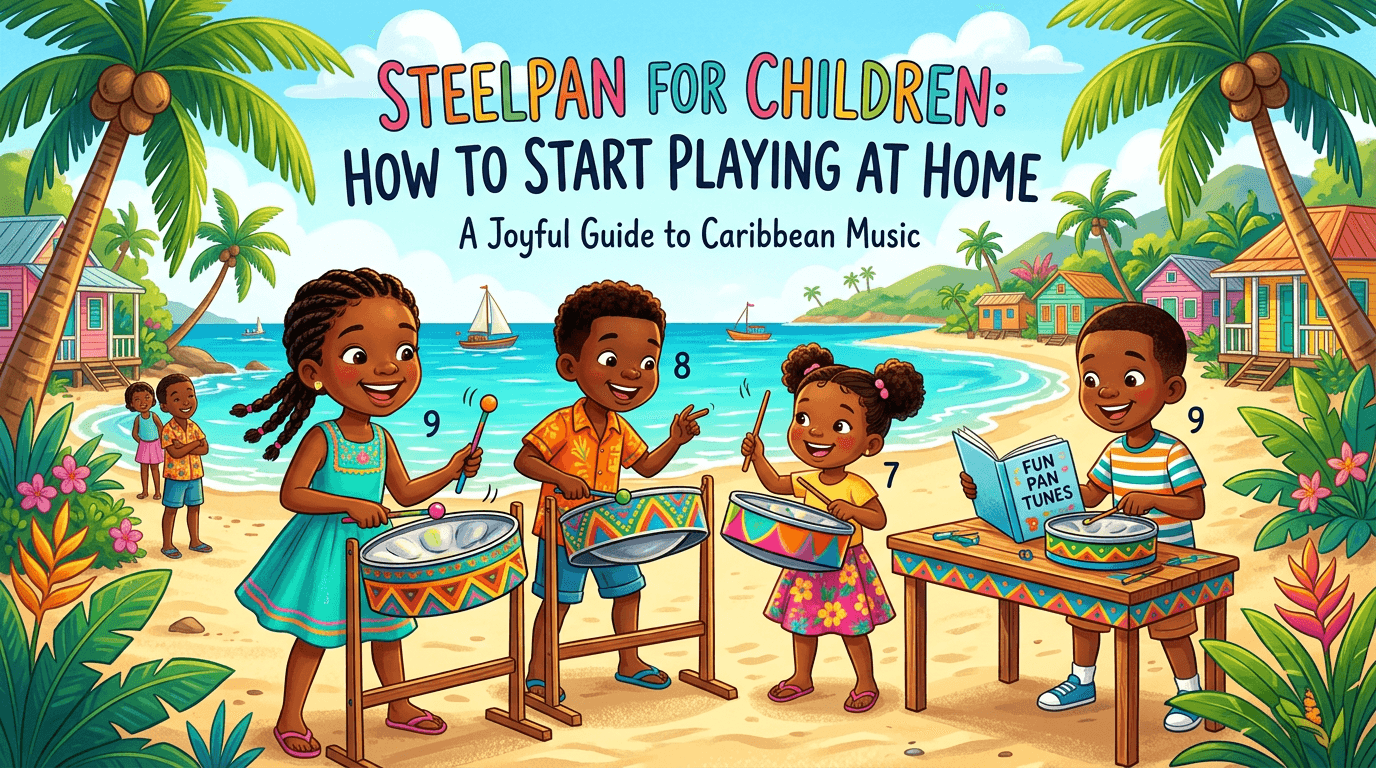
Music was also a tool of resilience. When colonial masters banned African drums out of fear that enslaved people were sending secret rebellion codes, Caribbean people innovated: they used bamboo stalks (Tamboo Bamboo in Trinidad) which eventually evolved into the steelpan, or played the fiddle and banjo with an unmistakably African swing.
3. Flavour from the Motherland: What's in Grandma’s Pot?
The easiest way to a child’s cultural heart is through their belly! Much of what we call Caribbean "soul food" has its roots in West African cooking techniques and staple ingredients.
Ground Provisions and Plantains
Yam, cassava, eddo, and green bananas—often called "ground provisions"—were the dietary backbone for West African societies. The technique of boiling them into hearty side dishes or mashing them (reminiscent of West African fufu) remains an island staple from Haiti to Barbados.
Callaloo and Okra
The word okra comes from the Igbo word ọ́kwurụ. Okra’s thick, silky texture gave rise to Caribbean pepperpot, gumbo, and stewed greens. Meanwhile, Jamaican callaloo (amaranth greens) closely mirrors the leafy vegetable stews savoured along the West African coast.
Next time your family sits down for Sunday dinner, invite the kids to participate. Remind them: "Every time we season our pot with scotch bonnet, thyme, and scallion, we are cooking just like our great-great-grandmothers in Africa did."
4. How We Talk: The Beauty of Caribbean Dialects
Sometimes parents worry that speaking Patois, Patwa, or Creole in front of their kids might interfere with their formal English. But linguists agree: Caribbean creoles are sophisticated, fully formed languages with complex grammatical structures rooted directly in Niger-Congo languages!
- Doubling Words for Emphasis: In Jamaican Patois, we say chaka-chaka (messy), nyami-nyami (greedy), or boonoonoonoos (sweetheart). Doubling words (reduplication) is a classic feature of West African languages like Twi and Yoruba.
- "Nyam" (To Eat): The word nyam used across Jamaica, Antigua, and Belize is directly borrowed from the Fula and Wolof words meaning "to eat."
- "Eye-water" and "Door-mouth": Compound words like eye-water (tears) and door-mouth (threshold) are literal translations of West African linguistic phrasing.
Teaching children that our dialect is not "broken English" but an ingenious linguistic bridge builds unshakeable confidence in their diaspora identity.
5. Actionable Heritage Activities for Your Home
Want to turn this heritage guide into family fun this weekend? Try these simple, hands-on activities with your children:
- Build a Heritage Map: Print an outline of the Atlantic ocean. Have your child draw a line from West Africa (Ghana, Nigeria, Sierra Leone) to your family's island of heritage (Jamaica, St. Lucia, Trinidad, etc.), and finally to where you live now. Label key foods and instruments along the route.
- Anansi Story Night: Turn off the lights, light a candle or flashlight, and share an Anansi folk tale before bed. Ask your children what moral decision they would have made if they were the spider.
- The "One Pot" Cooking Challenge: Cook a dish that bridges continents, like Jollof Rice alongside Caribbean Pelau or Jamaican seasoned rice. Compare the similarities in spices, rice, and coconut milk!
- Listen to the Drum: Play a Ghanaian Kpanlogo drum track followed by a Jamaican Nyabinghi chant and a Puerto Rican Bomba rhythm. Have the children clap the beat and notice the shared pulse.
Walking Proud as Likkle Legends
As the popular Jamaican proverb reminds us, "Tree widout root cyaan stand up" (A tree without roots cannot stand). When we nurture our children’s understanding of their African Caribbean heritage, we give them deep, unbreakable roots that allow their branches to reach anywhere in the world.
They begin to see that their heritage is not marked merely by struggle, but by boundless innovation, royal traditions, brilliant creativity, and joy. That is true heritage empowerment.
Ready to bring Caribbean culture to life for your children? Explore the world of Likkle Legends! From interactive cultural storybooks to printable activity sheets and family resources, we help your little ones celebrate who they are with pride and joy. Big up, and walk good!
Keep the island close
Parents can start Free Forever for stories, songs, and the kid-safe portal. Children do not buy anything in the app.
Parent sign up